Before, during and after a task
Example: compare rest, time-pressured arithmetic and recovery. Link cardiac measurements to ratings of perceived stress.
Plan the phases →Add the cardiac dimension to studies of stress, cognitive load and emotions. A single-channel ECG recorder, compatible with LSL through a software interface, links heartbeats to protocol stages.
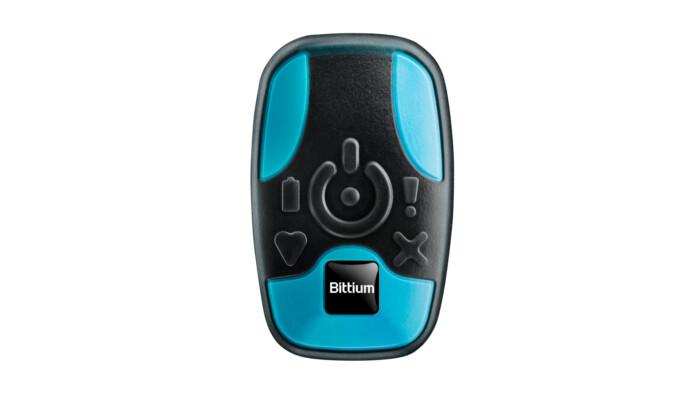
For protocols focused on beat intervals, one good-quality ECG channel may suffice to detect R peaks. Faros 180 provides portable recording with cable or compatible patch placement. The setup must enable reliable detection throughout the planned tasks.
| Feature | Faros 180 |
|---|---|
| ECG | 1 channel; adjustable sampling up to 1,000 Hz |
| LSL synchronisation | Integration via Bluetooth and a compatible software bridge configured on the acquisition computer |
| Battery life | Up to 7 days, depending on recording settings |
| Data | Open EDF format; download via micro-USB |
| Placement | Cable with snap electrodes or OmegaSnap 1-CH patch with compatible adapter |
ECG records the heart's electrical activity. HRV, or heart rate variability, describes changes in beat intervals. Analysis requires checking R-peak detection and artefacts before calculating metrics.
HRV contributes to studying autonomic regulation. It is not a universal stress score: breathing, posture, movement and measurement conditions affect interpretation. Compare equivalent periods and relate measurements to participant responses.
| Measurement | Role in your study |
|---|---|
| Heart rate | Track heart rate changes between phases |
| R–R intervals | Build the time series to check before analysis |
| HRV, including RMSSD | Describe variability over defined, comparable windows |
The following examples are design ideas for your team, not results obtained with Faros 180 or validated diagnostic tests.
Example: compare rest, time-pressured arithmetic and recovery. Link cardiac measurements to ratings of perceived stress.
Plan the phases →Example: arrange easy and difficult working-memory blocks. Relate cardiac measurements to errors, response times and perceived effort.
Connect measurements →Example: compare neutral and emotional stimulus sequences, with start and end markers and subjective ratings after each block.
Organise events →Example: compare two interfaces during the same task. Relate cardiac data to scanpaths and performance while documenting movements.
Explore eye tracking →Define durations, metrics and artefact processing before acquisition. A window suited to a brief cardiac response is not necessarily appropriate for HRV analysis. Read the methodological recommendations by Laborde, Mosley and Thayer (2017).
Lab Streaming Layer (LSL) brings together timestamped streams from multiple devices. Faros integration uses Bluetooth and a software interface on the computer: the sensor does not connect directly to the LSL network.
For ECG, EEG, eye tracking and stimuli, we check the bridge, versions, stream rates and available markers. This establishes how to connect measurements in your configuration.
Explore multimodal acquisition with StreamLab →The StreamLab guide presents Faros integration. StreamLive combines compatible streams and markers; StreamView locates and selects sequences. We check the Faros 180 configuration, versions and required streams with you.
For ECG and eye tracking, prepare shared events and check timing offsets in a representative trial. Faros EDF recordings and StreamLab exports are distinct workflows to choose according to your study.
Explore StreamLab and its interface screenshots · Prepare multimodal acquisition
Faros recordings are available in EDF. Choose third-party software that reads this format, then check beat detection, artefact correction and HRV calculations. Opening a file does not replace these analytical steps.
Send your protocol, participant count and software details. Gaze Intelligence supports setup selection, familiarisation and integration testing.
Technical documentation and further reading.
Describe your task, recording durations and other sensors to synchronise.