Your fNIRS protocol, from measurement to integration
Gaze Intelligence supports cortical coverage, optode setup, signal quality and acquisition planning. We also assess combinations with EEG, eye tracking and other physiological measurements.
Synchronisation, markers and export formats are part of protocol preparation. Describe regions of interest, population and movement constraints to discuss the required setup and support.
Let's discuss your fNIRS project →Functional near-infrared spectroscopy
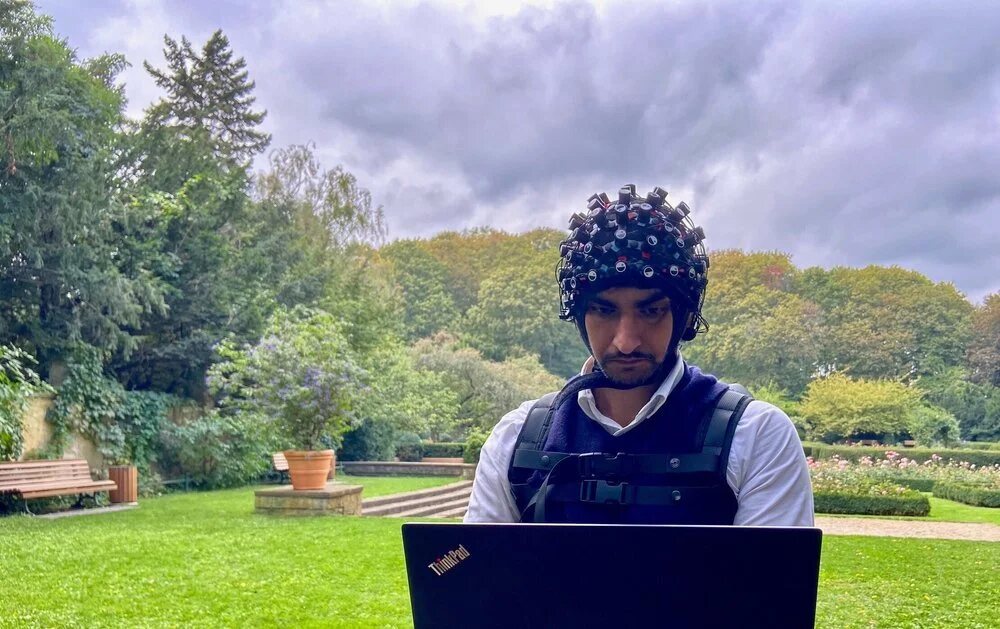
fNIRS uses light sources and detectors on the scalp. Absorption changes estimate oxygenated (HbO) and deoxygenated (HbR) haemoglobin concentration changes. This haemodynamic measurement is indirectly related to neural activity; it is not electrical recording.
The setup determines sampled areas. Optical contact, hair, movement and superficial physiology affect data. Theoretical channel count alone cannot compare configurations.
Three NIRx platforms, different needs
 MOBILITY
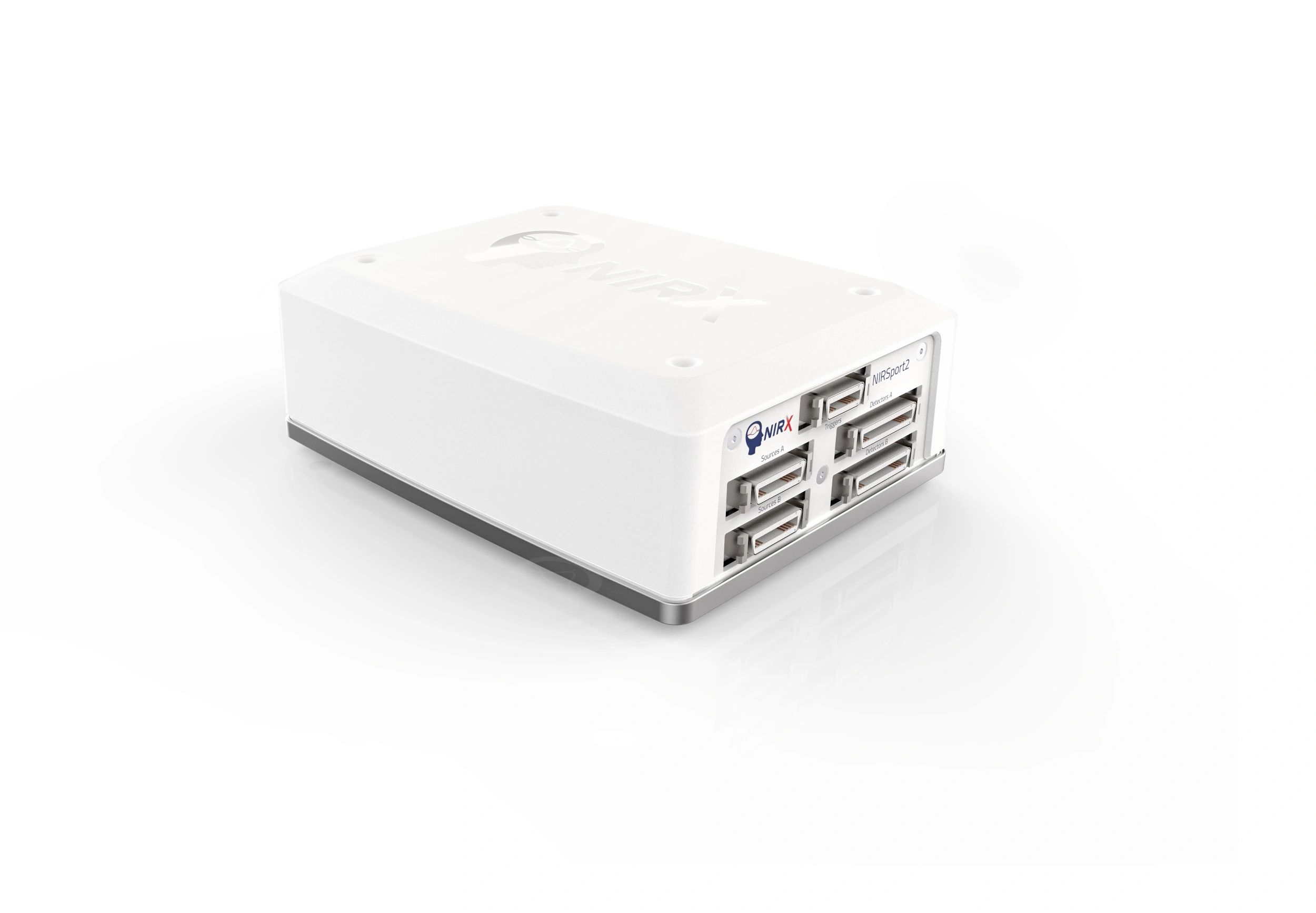
NIRSport2
Portable platform with Aurora fNIRS acquisition. The manufacturer describes 8- or 16-source configurations, detector options, USB or Wi-Fi and standalone recording. Options depend on the chosen configuration.
Request NIRSport2 documentation from Gaze Intelligence →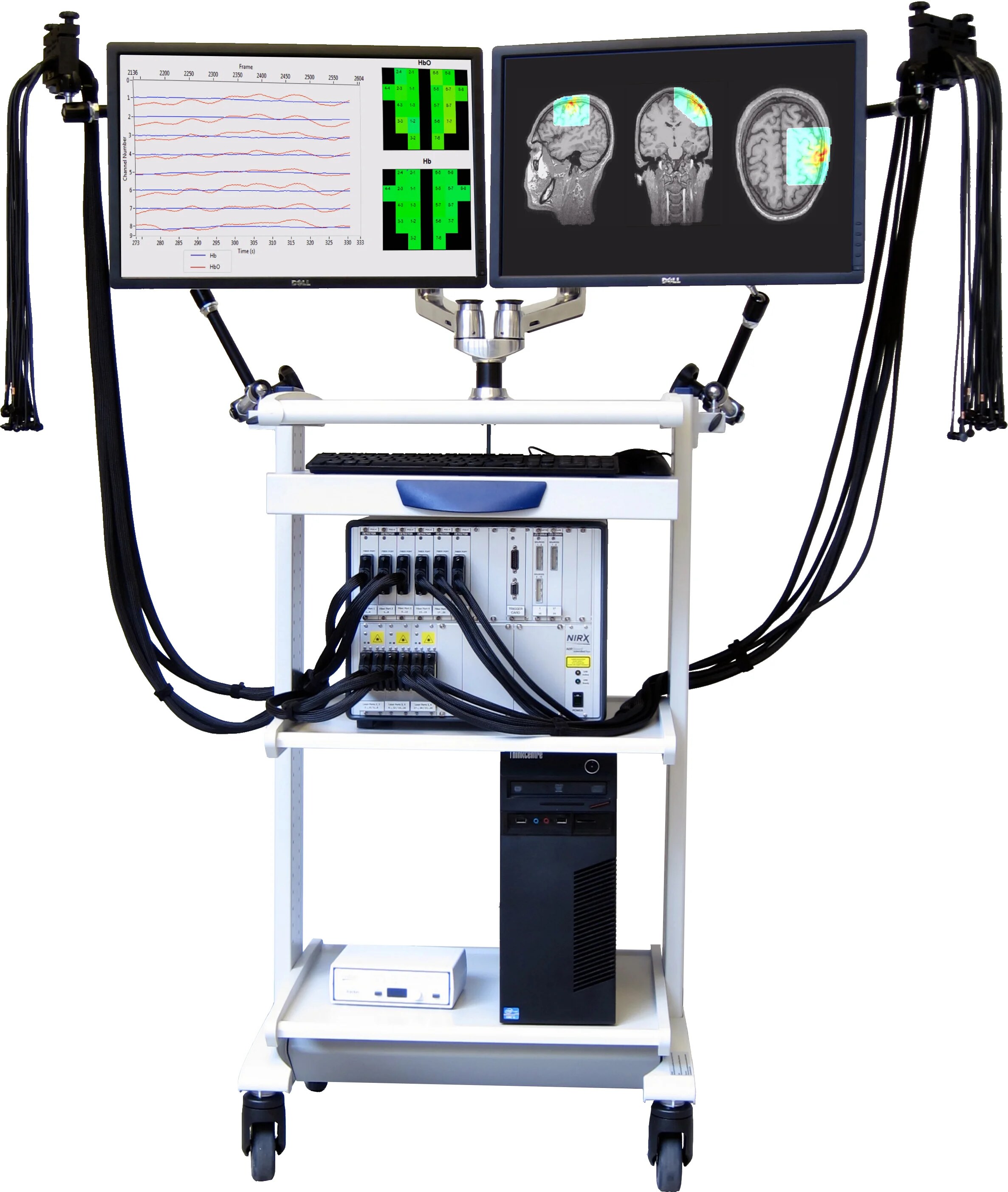 MODULARITY
NIRScout
NIRScout 2 · NIRScoutX+Modular platform to adapt coverage and optical options. Dedicated setups may combine EEG, TMS or MRI. Required equipment must be defined for each modality.
Request NIRScout documentation from Gaze Intelligence →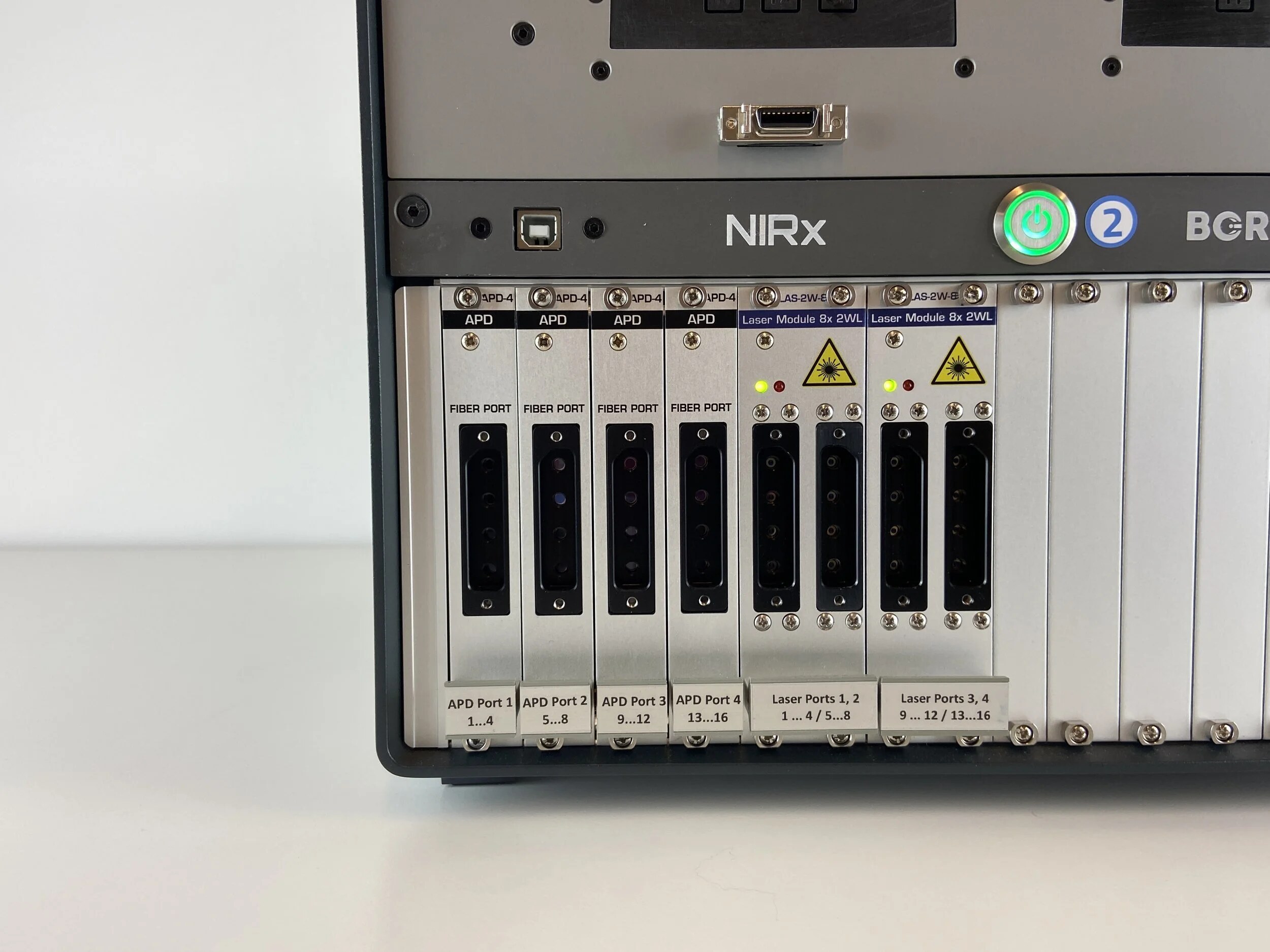 fNIRS AND fMRI
NIRxBorealis
A fibre-optic configuration for fNIRS in MRI, associated with NIRSport2. Accessories and installation conditions are integral to the project.
Discuss a Borealis configuration with Gaze Intelligence →Define coverage before counting channels
- Describe cortical regions of interest and choose an appropriate setup.
- Distinguish sources, detectors and source-detector pairs used in analysis.
- Plan short channels if the protocol needs to account for superficial signals.
- Assess cap comfort, contact through hair and stability during the task.
- Document events, quality data and exclusion criteria.
Cognition, movement and interactions
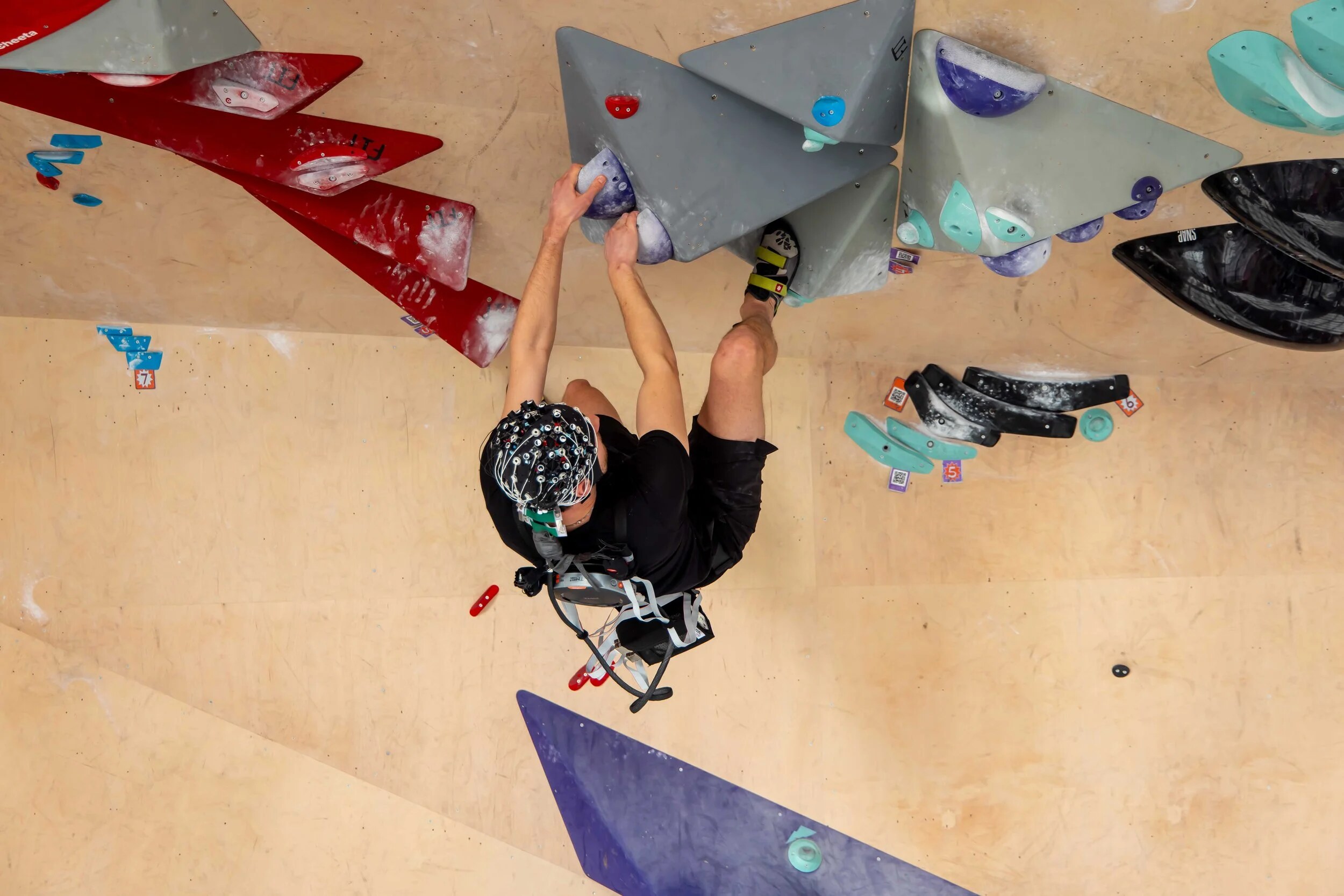
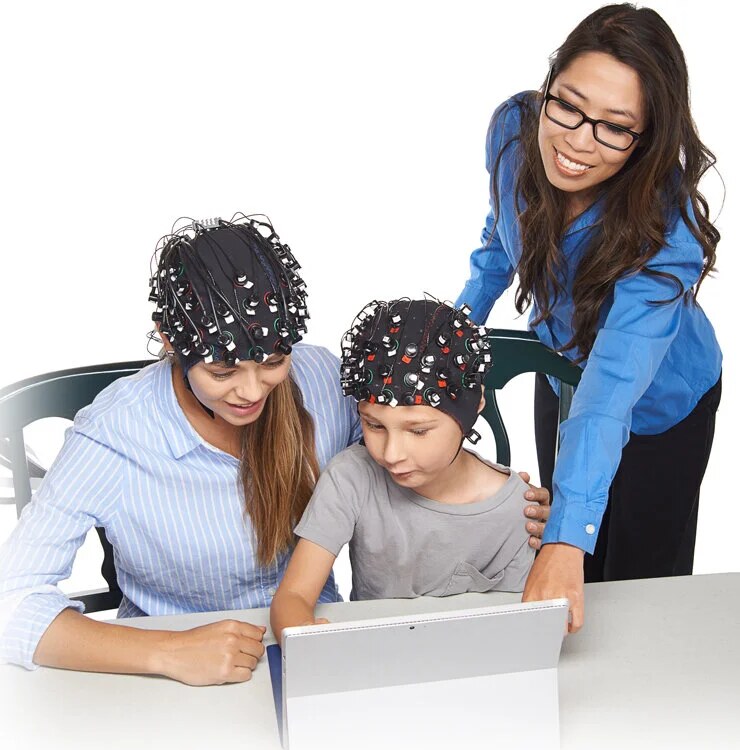
Screen studies, motor tasks and interpersonal interactions have different equipment needs. For movement, we assess mounting, freedom of movement and quality monitoring. Hyperscanning also requires participant and event synchronisation planning.
The research platforms shown here are not offered as diagnostic tools. In combined projects, compatibility must cover the whole configuration, not just the amplifier.
Prepare exports and analysis
NIRSport2 documentation mentions SNIRF and NIRS and synchronisation via LSL or trigger input. Aurora handles acquisition; Satori and Turbo-Satori serve different analysis uses depending on licences and needs.
We suggest checking a sample file in your analysis pipeline before deployment. Keep setup, events and settings too: a readable file may still be hard to interpret without them. Compare fNIRS and EEG. Prepare multimodal acquisition.
Sources and documentation
Technical documentation and further reading.
Selected publications using NIRx systems
NIRSport2 · movement & ergonomicsPeters et al. (2020)
“Passive, yet not inactive: robotic exoskeleton walking increases cortical activation dependent on task.” Journal of NeuroEngineering and Rehabilitation, 17, 107.
Read the publication ↗NIRScout · hyperscanningNguyen et al. (2021)
“Interpersonal Neural Synchrony During Father–Child Problem Solving: An fNIRS Hyperscanning Study.” Child Development, 92(4), e565–e580.
Read the publication ↗NIRScout · TMS–fNIRSLi et al. (2019)
“Cortical Hemodynamic Response and Connectivity Modulated by Sub-threshold High-Frequency Repetitive Transcranial Magnetic Stimulation.” Frontiers in Human Neuroscience, 13, 90.
Read the publication ↗fNIRS–fMRI · multimodal integrationHernández-Martin et al. (2017)
“Comparing diffuse optical tomography and functional magnetic resonance imaging signals during a cognitive task: pilot study.” Neurophotonics, 4(1), 015003.
Read the publication ↗Let's build your fNIRS setup.
Specify target regions, participants, expected movements and other modalities.